

When it comes to eye care, many people confuse the roles of an ophthalmologist and an optometrist. Although both professionals play a vital role in eye health, their roles and specialties are different. To help you better understand the differences between them, here are 9 key differences between an ophthalmologist and an optometrist.
1. Training and education
- Ophthalmologist: is a physician specializing in eye care. To become an ophthalmologist, it is necessary to complete a bachelor’s degree, attend medical school for four years and then complete a three- to four-year residency in ophthalmology. In total, ophthalmologists have 12 to 14 years of training.
- Optometrist: Not a medical doctor, but has a Doctor of Optometry (OD) degree. Optometrists complete a bachelor’s degree and then attend optometry school for four years to earn their degree. Their training is shorter than that of an ophthalmologist, about 8 years total.
Area of specialization

- Ophthalmologist: Has a background in eye medicine and surgery, allowing him/her to treat a wide variety of eye problems, perform surgery and treat complex conditions.
- Optometrist: Specializes in eye exams, prescribing glasses and contact lenses, and treating common vision problems such as myopia, hyperopia and astigmatism. It can also detect certain eye conditions, but does not perform surgery.
3. Diagnosis and treatment of eye diseases.
- Ophthalmologist: Can diagnose and treat complex eye diseases, such as glaucoma, macular degeneration and retinal detachment. He can also prescribe medications and perform surgical procedures.
- Optometrist: Is trained to diagnose common vision problems and some eye diseases, but can only treat minor conditions and prescribe certain medications. For more serious problems, the optometrist will refer the patient to an ophthalmologist.
4. Performance of eye surgeries.
- Ophthalmologist: Is the only one of the two who is trained to perform eye surgeries, such as cataract surgery, LASIK and glaucoma surgery.
- Optometrist: Does not perform eye surgeries, although he/she may assist in the preparation and postoperative follow-up of patients who have undergone surgery by an ophthalmologist.
5. Eye exams and eyeglasses prescription
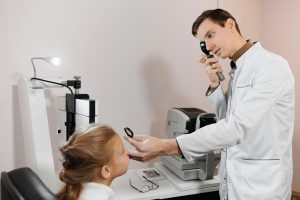
- Optometrist: This is the main professional who performs routine eye exams and prescribes eyeglasses and contact lenses. It is their specialty and most people go to an optometrist for their annual eye examinations.
- Ophthalmologist: Can also perform eye exams and prescribe glasses, but his main focus is on more complex eye problems and treatment of disease.
6. Preventive care and vision correction
- Optometrist: Focuses primarily on prevention, detection and correction of vision problems. It helps patients improve their quality of life by correcting their vision with glasses or contact lenses.
- Ophthalmologist: Although also involved in preventive care, his main role is to address eye conditions that require medical or surgical treatment.
7. Equipment and technology used
- Ophthalmologist: Uses advanced and specialized equipment to diagnose and treat a wide range of eye diseases. This includes technology to perform surgeries and complex procedures.
- Optometrist: Uses basic equipment for eye exams and fitting glasses and contact lenses. His equipment is less complex than that of an ophthalmologist, as he does not perform surgical procedures.
8. Cost of services.
- Ophthalmologist: Consultations and treatments tend to be more expensive, especially if they involve specialized surgeries or procedures. This is due to their extensive medical training and experience.
- Optometrist: Consultations with an optometrist are often more affordable and accessible for those seeking eye examinations or prescriptions for glasses and contact lenses.
9. When to visit one and when to visit the other.
- Optometrist: This is your first point of contact for routine eye exams, correction of vision problems and screening for common conditions. If you need glasses or contact lenses, see an optometrist.
- Ophthalmologist: You should see an ophthalmologist if you have serious eye symptoms, such as pain, sudden vision loss, extreme redness or if you have already been diagnosed with an eye condition that requires specialized treatment or surgery.

Who is right for you?
Now that you know the 9 key differences between an ophthalmologist and an optometrist, it’s important to know who to go to based on your needs. If you’re looking for an eye checkup, a new prescription for glasses or screening for common problems, the optometrist is the best choice. But if you face a more serious eye problem or need surgery, the ophthalmologist is the professional who will provide the specialized care you need.
Conclusion
Both ophthalmologists and optometrists play a crucial role in eye health care, but they have different roles and specialties. Understanding these differences will allow you to make informed decisions about your eye care and ensure you receive the right treatment to maintain clear, healthy vision.